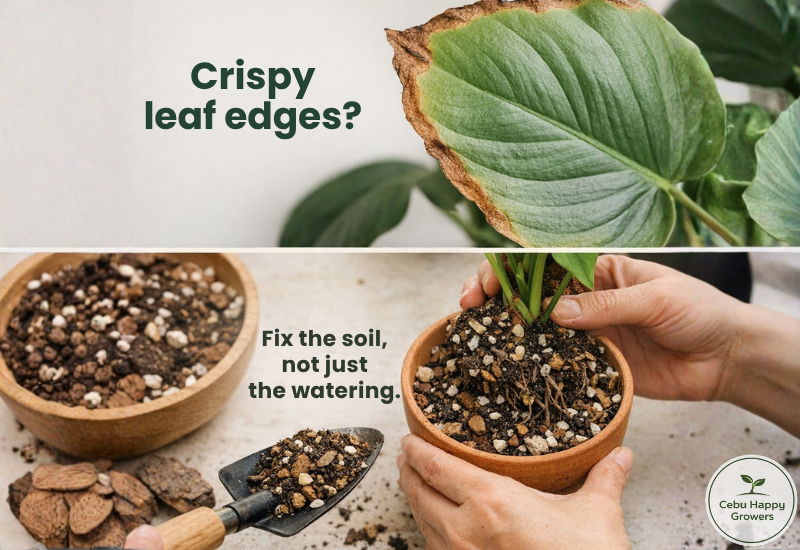
Why Plant Leaves Turn Brown and Crispy at the Edges (And What Most Growers Overlook)
Over the past few months, one of the most common questions we receive from our customers is this:
“Why are my plant leaves turning brown and crispy at the edges?”
It’s a concern shared by both beginners and experienced growers. And in most cases, the assumption is the same – there must be something wrong with watering.
But from what we consistently see in actual growing conditions, watering is rarely the real issue.
What shows up on the leaves is only the surface symptom.
The cause almost always starts below – within the root environment.
What Brown, Crispy Edges Really Mean
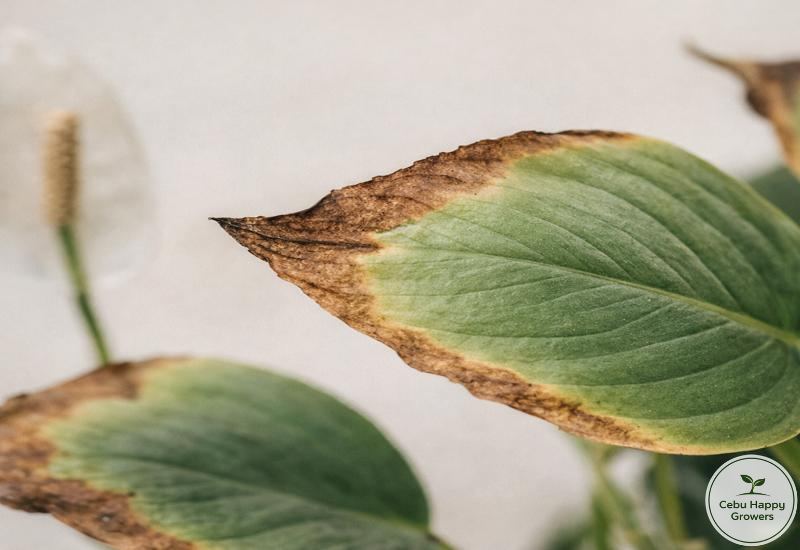
When leaf edges dry out and turn brown, the plant is no longer able to regulate moisture efficiently.
This is not simply a matter of “too much” or “too little” water. It is a sign that the roots are under stress – either struggling to absorb water, or unable to function properly due to the condition of the soil.
At this stage, adjusting your watering routine alone will not resolve the issue.
Looking Below the Surface
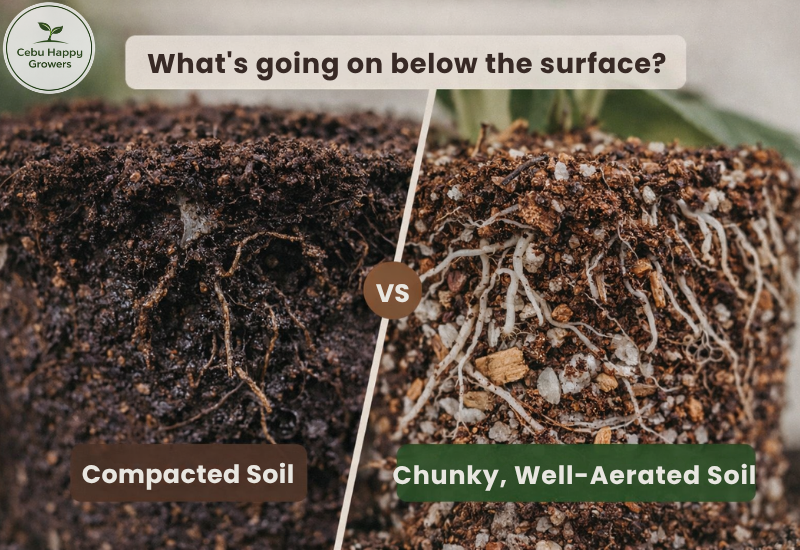
In most cases we assess, the issue traces back to the structure and condition of the soil.
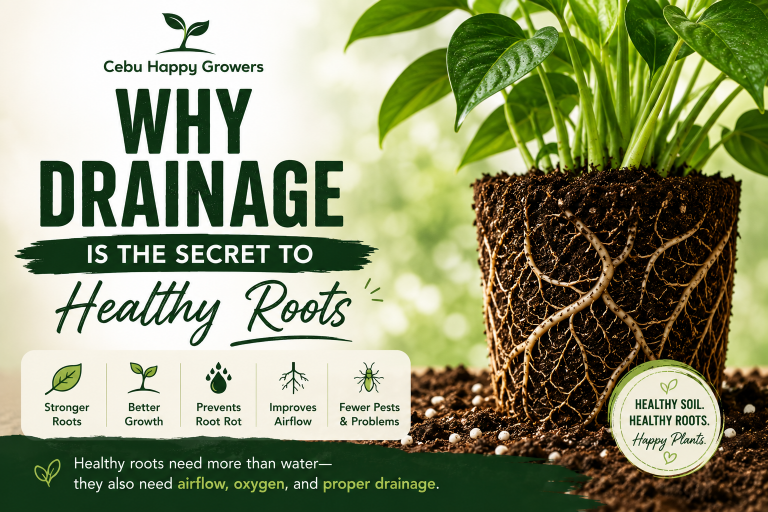
Over time, many potting mixes begin to break down and compact. What was once light and breathable becomes dense and moisture-heavy. Airflow within the root zone is reduced, and roots begin to suffocate.
At the same time, poor drainage allows excess water to remain in the pot longer than it should. Even if watering is done correctly, the roots are left sitting in conditions that slowly weaken them.
There is also the factor of mineral and salt buildup. With repeated watering and fertilization, residues accumulate in the soil – especially in mixes that do not drain well. This creates a subtle but continuous stress on the roots, often described by growers as “burn,” which eventually appears as browning at the leaf edges.
Inconsistent moisture adds another layer. When the soil swings between very dry and overly wet, roots are forced to constantly adjust, reducing their ability to function efficiently.
What Experienced Growers Do Differently
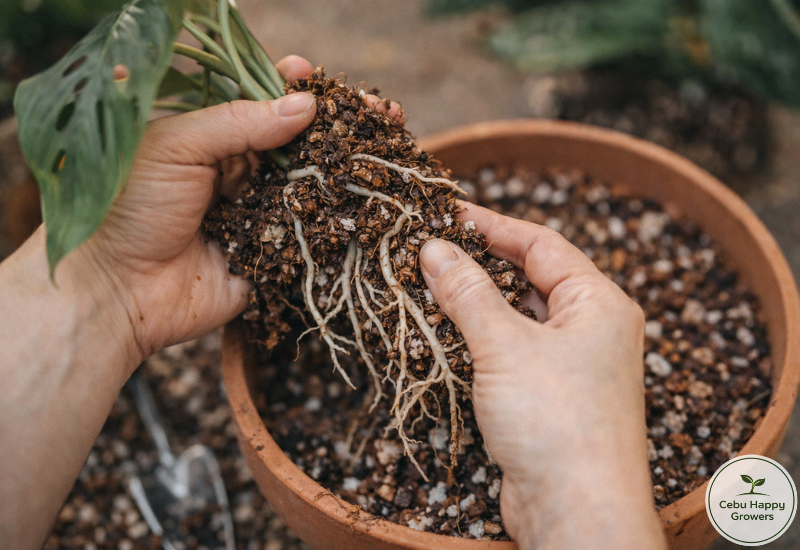
Rather than focusing only on watering schedules, experienced growers shift their attention to something more fundamental – the root environment itself.
They prioritize soil that maintains structure over time.
They ensure that airflow remains consistent around the roots.
They avoid mixes that retain excess water without proper drainage.
Because once the root system is stable, the plant is able to regulate moisture on its own- and issues like crispy leaf edges stop recurring.
Why More Growers Are Switching to Chunky Mixes
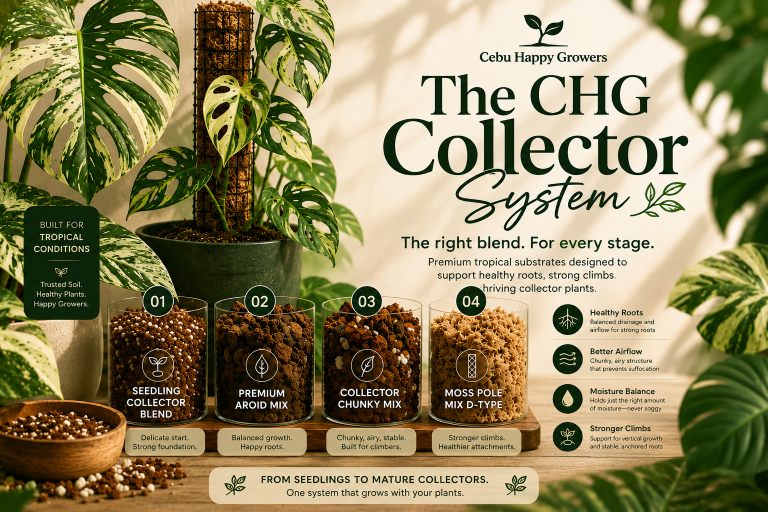
This is where chunky, well-aerated mixes come in.
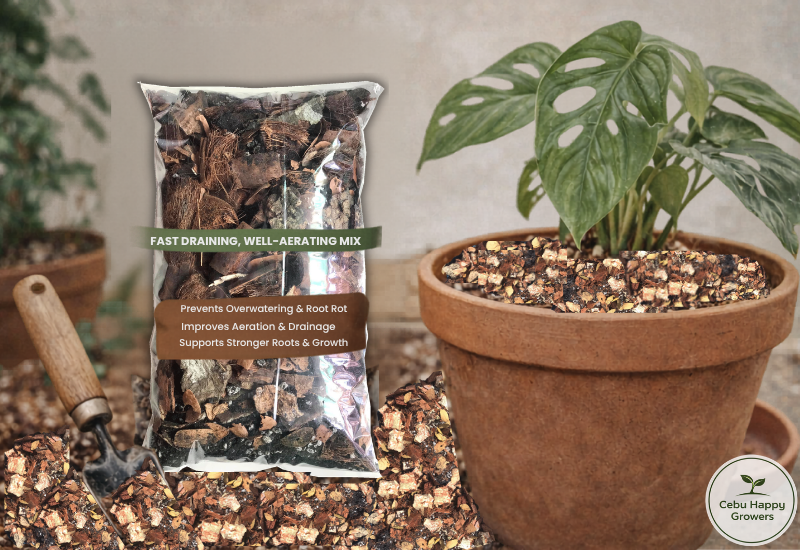
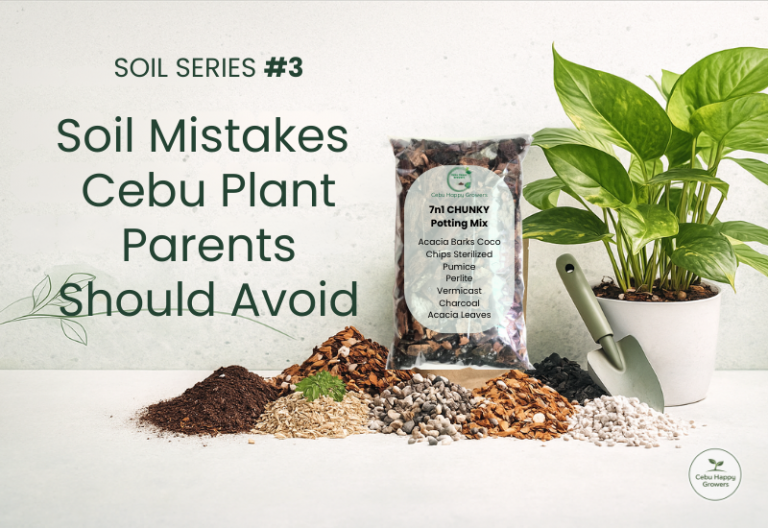
At Cebu Happy Growers, our 7n1 Chunky Premium Mix was developed specifically to address these root-level issues. Instead of compacting over time, it maintains air pockets that allow roots to breathe. Excess water drains more efficiently, reducing the risk of waterlogging, while still retaining enough moisture for steady uptake.
In practice, growers using this type of mix report more stable growth, stronger root systems, and significantly fewer cases of browning or crisping along leaf edges.
A More Accurate Way to Look at the Problem
Brown, crispy leaf edges are not simply a watering mistake.
They are a signal that the root environment needs correction.
Growers who continue adjusting watering without addressing the soil often find themselves dealing with the same issue repeatedly. But those who correct the structure, drainage, and airflow of their mix tend to see lasting improvement.
Because in the end, healthy leaves are only a reflection of healthy roots.
For Growers Looking to Improve Their Setup
Cebu Happy Growers supplies 7n1 Chunky Premium Mix for growers who prioritize root performance and long-term plant health.
Available for bulk orders.
Follow Cebu Happy Growers for soil tips & bulk supplier updates 🌱