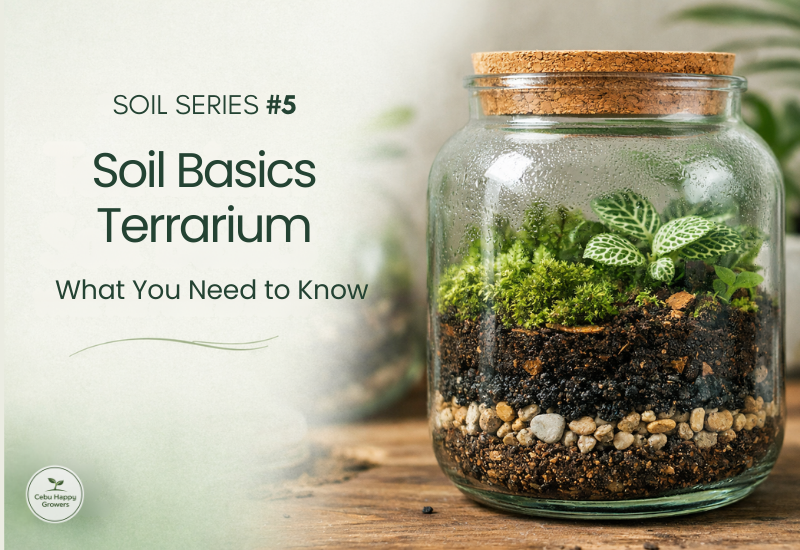
Soil Series #5: Terrarium Soil Basics: What You Need to Know
Terrariums may be small, but the soil inside them does a big job.
In a closed space like a terrarium, every layer matters—there’s very little room for shortcuts. When soil isn’t right, problems show up quickly: excess moisture, mold, unpleasant smells, or roots that slowly rot beneath the surface.
If you’ve ever wondered why a terrarium struggles even when you “don’t overwater,” the answer almost always comes down to soil choice and structure.
This guide is for plant parents who want terrariums that stay fresh, balanced, and easy to maintain – whether you’re working with a glass jar, bottle, or a small container on your desk.
What Makes Terrarium Soil Different?
Terrariums create a unique environment: low airflow, higher humidity, and limited space for error.
Because of this, the soil needs to:
- Drain excess moisture without drying out completely
- Stay airy and breathable over time
- Support beneficial microbes (not odor-causing bacteria)
- Resist compaction in a closed container
Regular garden soil or heavy potting mixes weren’t designed for this kind of setting.
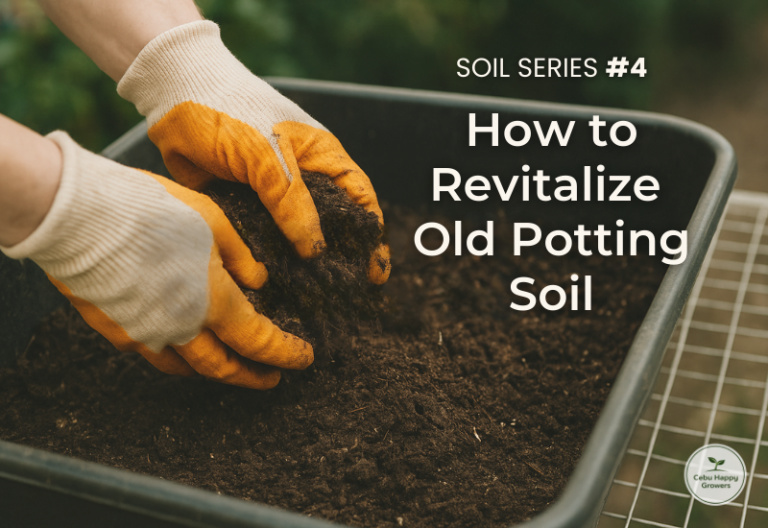
If you’ve read our earlier post on why old soil becomes “dead soil”, the same principle applies here—just in a much smaller, more sensitive system.
Why a 7-in-1 Potting Mix Style Works Well for Terrariums
From experience, mixes like our 7-in-1 Chunky Mix, work especially well in terrariums because they already balance the three things these environments need most: moisture control, airflow, and biological support.
Moisture Control
Coco-based components help hold just enough moisture to support plant roots without creating soggy conditions that lead to rot.
Airflow & Structure
Chunky elements create air pockets in the soil—critical in glass containers where oxygen exchange is limited.
Living Support
Organic components like vermicast help keep the soil biologically active, reducing odor and supporting steady, healthy growth over time.
For plant parents who prefer a simpler or DIY approach, a custom terrarium blend can also work well:
Basic Terrarium Soil Blend
- Coco peat – moisture balance
- Vermicast – nutrients & beneficial microbes
- Optional chunky material – added airflow
This combination follows the same soil principles while remaining lightweight and breathable.
How to Properly Layer Soil in a Terrarium
Layering isn’t just for aesthetics—it’s what keeps a terrarium stable long-term.
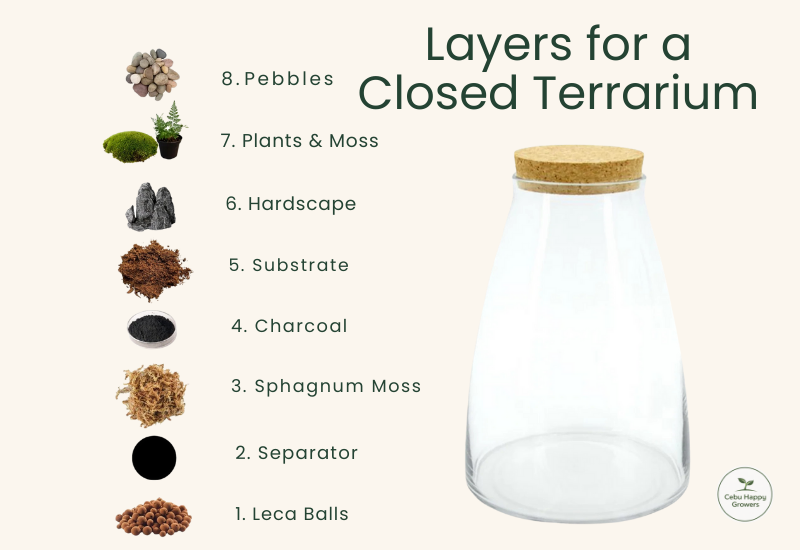
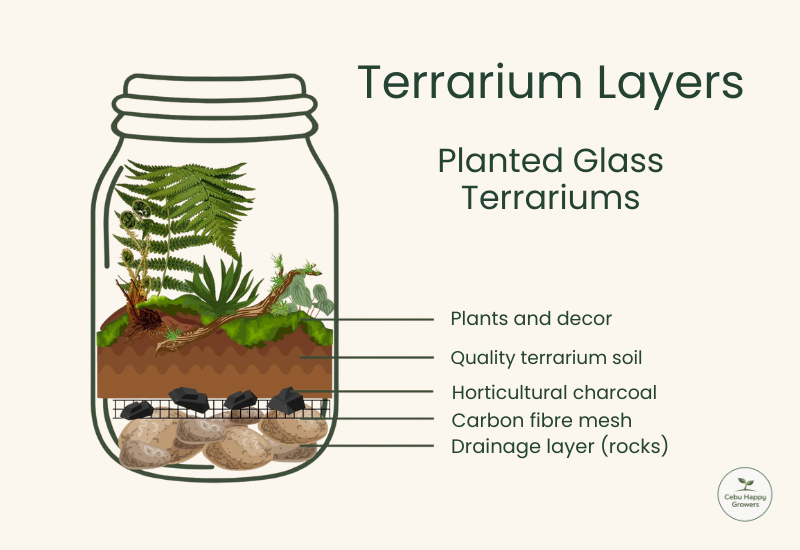
Step-by-Step Terrarium Layering
1. Drainage Layer
Start with small stones or gravel at the bottom of the container. This layer prevents water from sitting directly at the roots, especially important in containers without drainage holes.
2. Barrier Layer (Optional but Helpful)
A thin layer of mesh or charcoal helps separate the drainage from the soil and keeps fine particles from settling below.
3. Soil Layer (Main Growing Medium)
Add your 7-in-1 mix or coco peat + vermicast blend. This is where roots live – keep the soil loose and airy, never tightly packed.
Healthy terrariums aren’t built by adding more later—they’re built by getting the soil right from the start.
4. Top Layer (Optional)
Moss or decorative elements can help regulate surface moisture and create a more natural finish.
CHG Tip: Gently tap the container to settle the soil instead of pressing it down. Roots need breathing space.
Open vs Closed Terrariums: Adjusting Your Soil Approach
- Closed terrariums
Use lighter, chunkier soil and water sparingly. Moisture recycles naturally inside.
- Open terrariums
Slightly more moisture-retentive soil works since airflow is better and evaporation happens faster.
Understanding this difference helps prevent overcorrection later on.
Final Thoughts: Small Spaces Still Need Smart Soil
Terrariums may be compact, but they function as complete ecosystems.
When soil is treated as a system – not just a filler, you’ll notice:
- Less mold and odor
- Healthier root systems
- Balanced moisture levels
- Slower, steadier plant growth
That’s the quiet success we believe in at Cebu Happy Growers – soil doing its job so plants can simply grow.